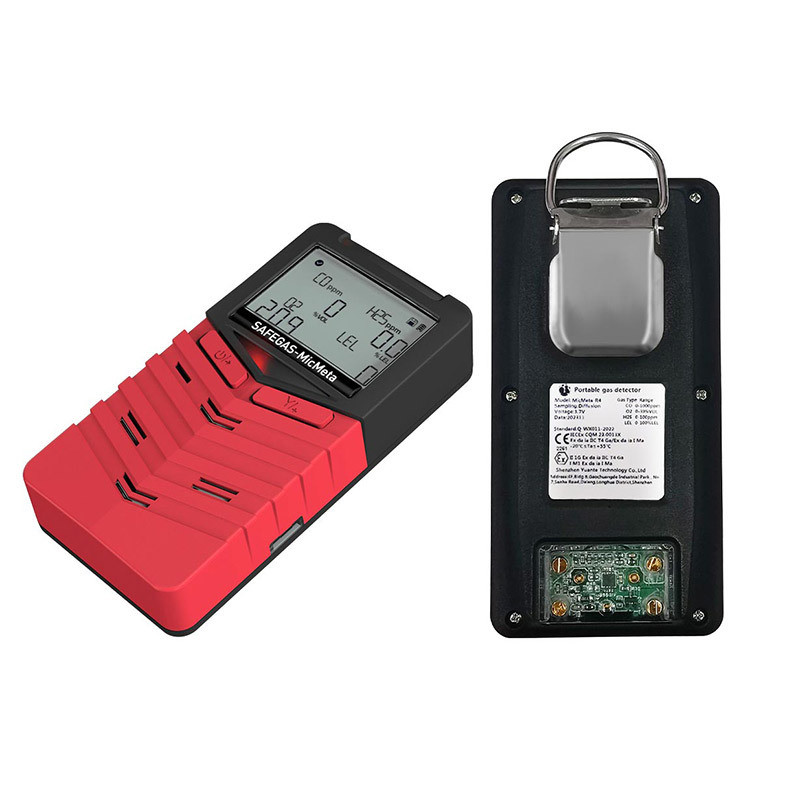
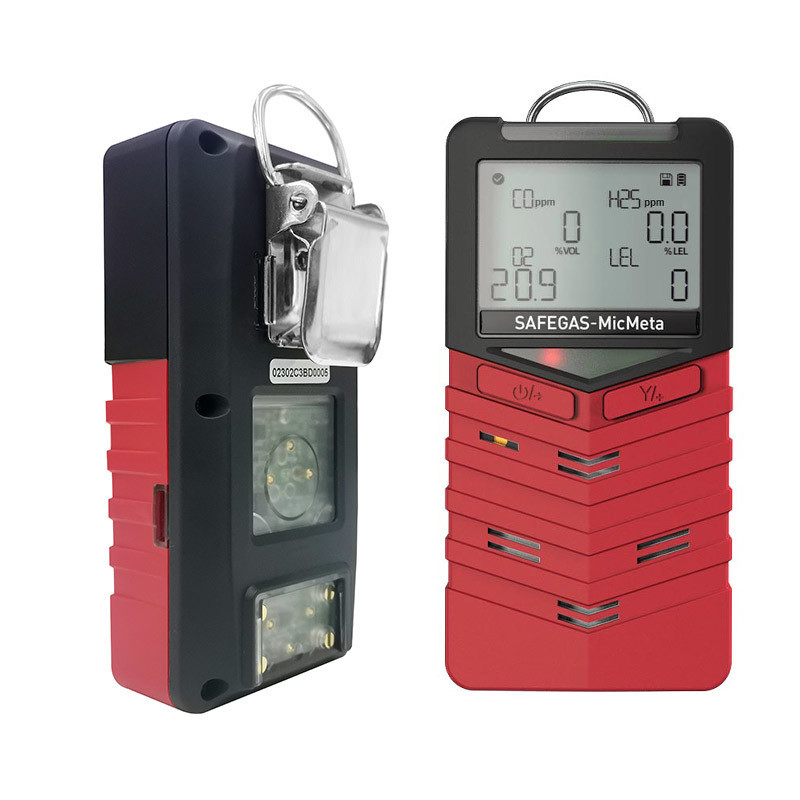
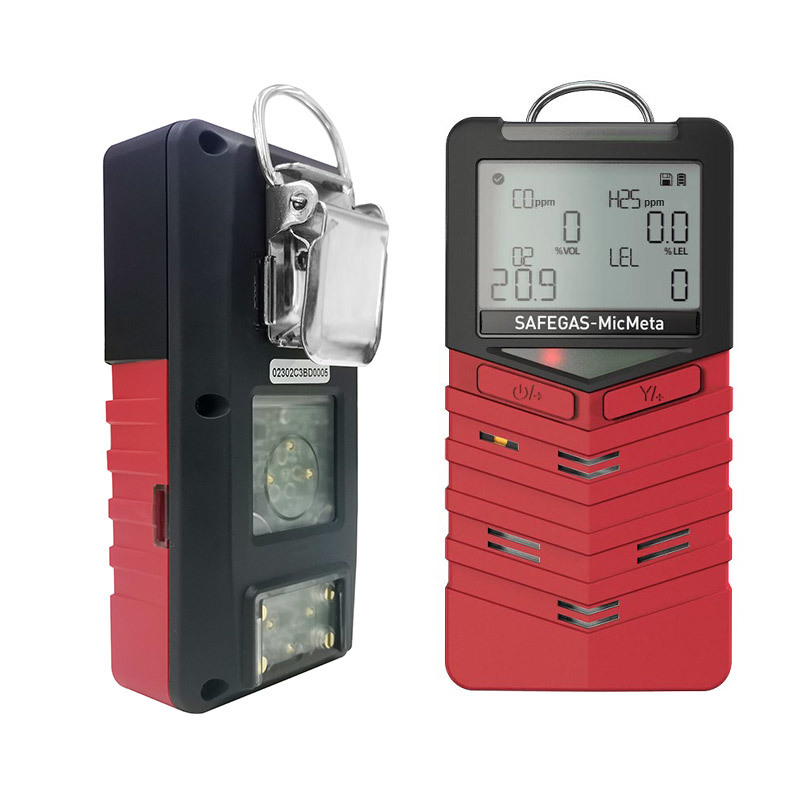
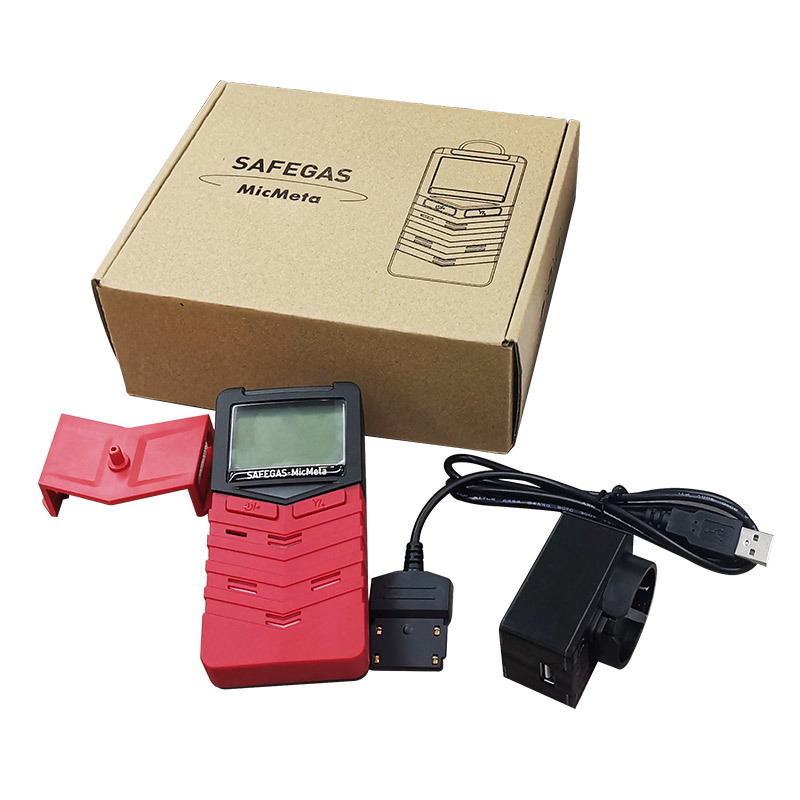
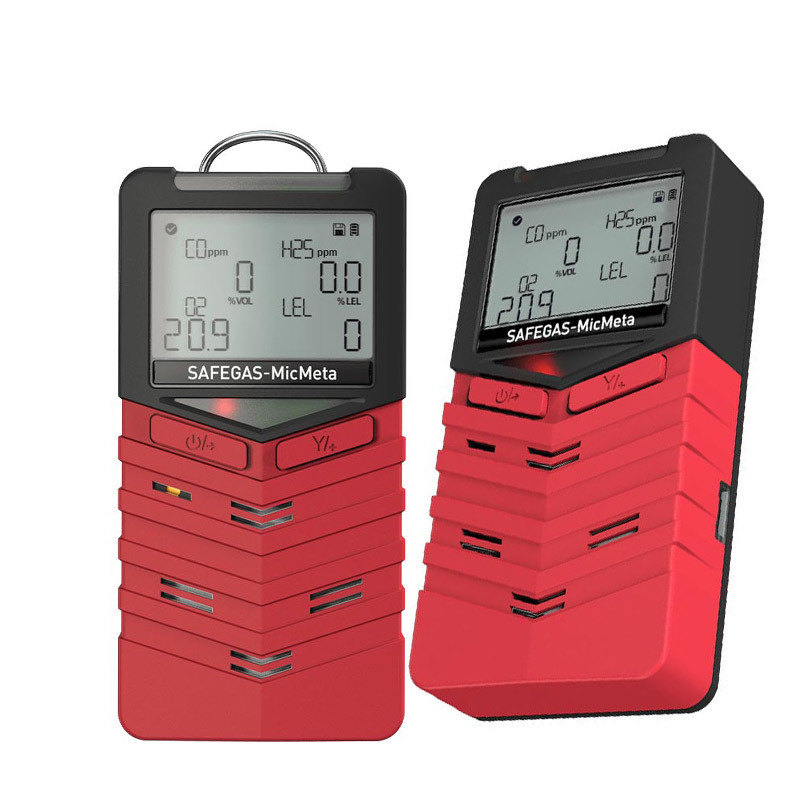
Professional multi-gas detector designed for carbon monoxide monitoring with advanced safety features and robust construction.
A rugged, IECEX/ATEX/EMC certified diffusion multi-gas detector. Detects carbon monoxide (CO) from 0–500ppm with 1ppm resolution. Features IP66/IP68 water/dust resistance, 1.5m drop resistance, man down alarm, data logging (1000 data + 100 event records), and 24-hour battery life. Optional LoRa/Bluetooth wireless and DKM docking station for automated bump testing, calibration, and configuration. Ideal for industrial safety, confined space entry, and coal mining.
Product Overview
The MicMeta is an IECEX/ATEX/EMC certified portable multi-gas detector using diffusion sampling – no pump, no extra weight, perfect for hands-free personal monitoring. It is compact (45×58×116mm) and lightweight (240g) with a back clip for comfortable all-day wear.
Taking carbon monoxide (CO) as an example, the MicMeta uses an electrochemical sensor to measure concentrations from 0–500ppm with a resolution of 1ppm. Response time (T90) is ≤30 seconds. The device supports one-key unit switching between ppm and mg/m³ with automatic concentration conversion.
The detector features three simultaneous alarm modes: 95dB buzzer (@30cm), vibration alarm, and flashing red bars with on-screen alarm indication. Alarm set points for all sensors are user adjustable. Additional alarms include diagnostic alarm, battery under-voltage alarm, and standard man down alarm.
Data logging is built-in: 1000 data records and 100 event records. Optional LoRa and Bluetooth wireless transmission enables remote data access, and the device supports remote firmware upgrade. An optional DKM-MicMeta docking station allows for daily bump tests, calibration, and parameter configuration.
Powered by a 2300mAh rechargeable lithium battery, it runs up to 24 hours per charge (charging time <6 hours). With explosion-proof certification Ex ia IIC T4 Ga and Ex ia I Ma, it operates reliably from -20°C to +55°C and 0–95% RH.
Why Detect Carbon Monoxide (CO)?
Carbon monoxide is a colorless, odorless, tasteless, and highly toxic gas produced by incomplete combustion of carbon-containing fuels. It is often called the "silent killer" because it is impossible to detect without an instrument.
Common sources of CO emissions:
| Source Category |
Specific Sources |
| Combustion |
Internal combustion engines (cars, trucks, forklifts, generators), furnaces, boilers, water heaters |
| Industrial |
Steel mills (blast furnaces, coke ovens), chemical plants, refineries, pulp & paper mills |
| Mining |
Diesel-powered underground equipment, blasting, coal oxidation |
| Fire |
Structure fires, wildfires, smoldering materials |
| Residential |
Malfunctioning gas stoves, fireplaces, space heaters, tobacco smoke |
| Confined Spaces |
Parking garages, tunnels, loading docks, warehouses with gas-powered forklifts |
Health effects of CO exposure (at sea level):
| Concentration (ppm) |
Exposure Time |
Health Impact |
| 50 ppm |
8 hours |
OSHA PEL (permissible exposure limit) |
| 200 ppm |
2–3 hours |
Mild headache, fatigue, nausea |
| 400 ppm |
1–2 hours |
Serious headache, confusion, rapid breathing |
| 800 ppm |
45 minutes |
Dizziness, convulsions, unconsciousness |
| 1,600 ppm |
20 minutes |
Nausea, collapse, death possible |
| 3,200 ppm |
5–10 minutes |
Headache, dizziness, death within 30 minutes |
| 12,800 ppm |
1–3 minutes |
Death |
CO kills by binding to hemoglobin in the blood (forming carboxyhemoglobin), which prevents oxygen from being carried to vital organs. Because it is odorless and colorless, only a gas detector can provide protection.
Where MicMeta is used for CO detection:
- Coal mines – Monitoring CO from blasting, diesel equipment, and coal oxidation (spontaneous combustion)
- Parking garages & tunnels – Vehicle exhaust accumulation
- Confined space entry – Tanks, silos, sewers, manholes, vaults
- Steel mills & foundries – Blast furnaces, coke ovens, sintering plants
- Oil & gas refineries – Process areas, flare stacks, maintenance turnarounds
- Chemical plants – Manufacturing areas with CO as feedstock or byproduct
- Fire & rescue – Post-fire overhaul to check for lingering CO
- Warehouses & distribution centers – Areas with gas-powered forklifts
- Power plants – Boiler rooms, coal handling areas
- Parking structures – Underground and enclosed parking facilities
- Ice rinks – Resurfacing equipment powered by propane or gasoline
- Indoor firing ranges – Lead and CO from ammunition combustion
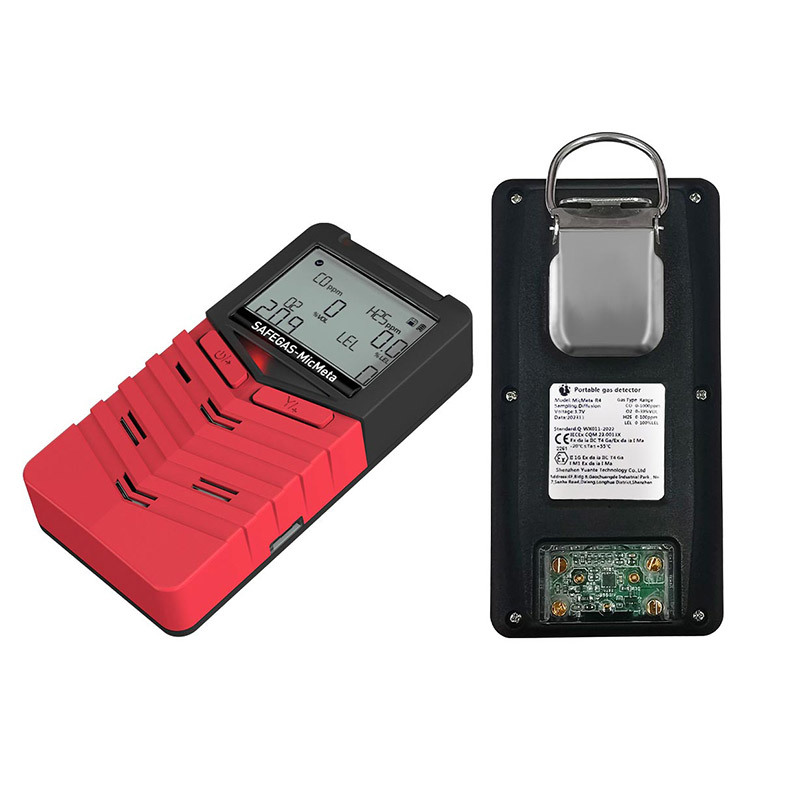
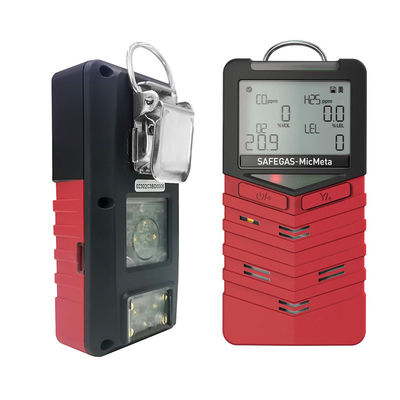
Product Pictures
Key Technical Specifications (for CO, 0–500ppm)
| Parameter |
Value |
| Gas Detected |
Carbon Monoxide (CO) – also supports H₂S, O₂, LEL, and hundreds of other gases |
| Working Method |
Diffusion |
| Detection Principle |
Electrochemical |
| Measuring Range |
0 – 500 ppm |
| Resolution |
1 ppm |
| Response Time (T90) |
≤30 seconds |
| Unit |
ppm / mg/m³ switchable by one key, automatic concentration conversion |
| Display |
Segment code LCD |
| Auto-Test & Calibration |
After power-on: auto-test, calibration, auto-zero; supports DKM docking station (optional) |
| Data Logging |
1000 data records + 100 event records |
| Alarm Types |
95dB buzzer (@30cm), vibration alarm, flashing red bars, on-screen alarm indication; alarm latching; diagnostic alarm; battery under-voltage alarm; man down alarm; all alarm set points user adjustable |
| Battery |
3.7V rechargeable lithium battery, 2300mAh |
| Operating Hours |
24 hours standby; charging time <6 hours |
| Wireless Transmission |
Bluetooth (optional), LoRa (optional) |
| Certification |
IECEx: Ex ia IIC T4 Ga, Ex ia I Ma; ATEX: (II) 1G Ex ia IIC T4 Ga, Ex ia I Ma |
| Protection Grade |
IP66 / IP68 |
| Drop Resistance |
1.5 meters |
| Operating Temperature |
-20°C to +55°C |
| Operating Humidity |
0–95% RH (non-condensing) |
| Operating Pressure |
86–106 kPa |
| Dimensions |
45 × 58 × 116 mm (L × W × H) |
| Weight |
240g (including lithium battery) |
Main Features
- Diffusion sampling – Maintenance-free, no pump, lightweight and quiet, perfect for personal worn monitoring.
- Rugged & reliable – IP66/IP68 waterproof/dustproof and 1.5m drop resistance, built for harsh job sites.
- Man down alarm – Standard function to alert when the operator is motionless, enhancing lone worker safety.
- Comprehensive data logging – 1000 data records + 100 event records; all alarms and concentrations logged.
- User-adjustable alarm set points – All sensor alarm thresholds can be customized on-site.
- One-key unit switch – Toggle between ppm and mg/m³ instantly, no manual calculation.
- Remote firmware upgrade – Update device software without returning to factory.
- Wireless connectivity (optional) – Supports LoRa or Bluetooth for remote real-time data access.
- DKM docking station ready – Optional station for bump testing, calibration, and parameter configuration.
- Long battery life – 24 hours of continuous operation on a full charge.
- Multi-alarm system – Audible (95dB), visual (flashing red bars), vibration, plus diagnostic alarms for low battery and man down.
- IECEX/ATEX certified – Ex ia IIC T4 Ga and Ex ia I Ma for use in coal mines and explosive atmospheres.
DKM-MicMeta Docking Station
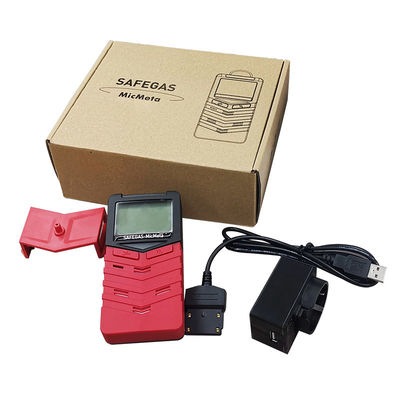
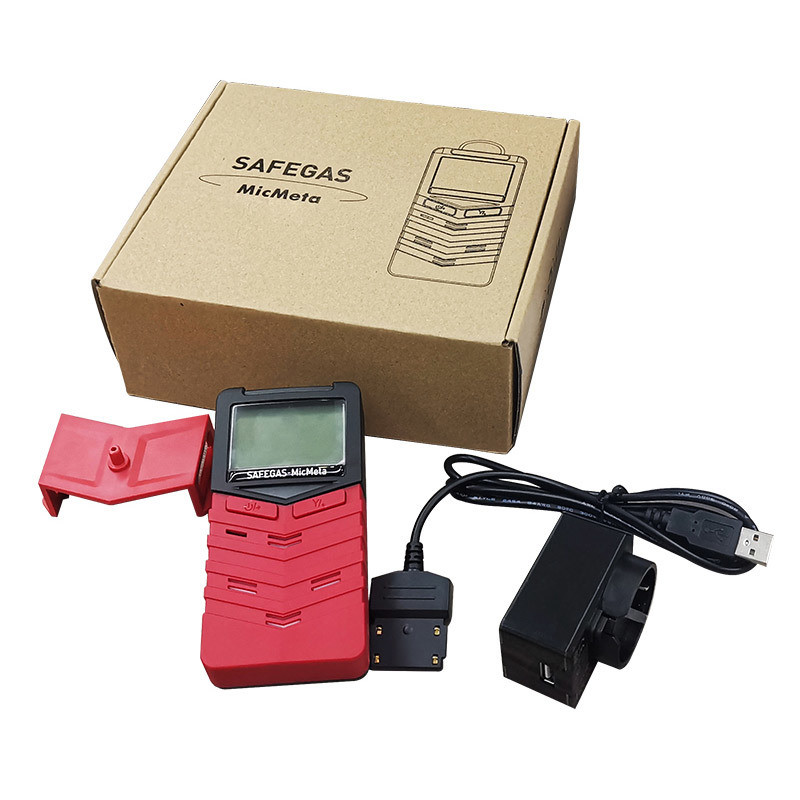
The DKM-MicMeta is an optional docking station designed for daily bump testing, calibration, and parameter configuration of MicMeta detectors. It simplifies fleet management, ensures compliance with safety regulations, and reduces manual maintenance time.
Key Functions of DKM-MicMeta
| Function |
Description |
| Bump Test |
Automatically verifies that the detector responds to gas and that alarms function correctly – pass/fail result indicated by LED |
| Calibration |
Performs span calibration to ensure measurement accuracy (requires calibration gas) |
| One-Key Configuration |
Quickly uploads low alarm, high alarm, range, calibration expiration, and bump test interval to the detector |
| Data Export |
Exports bump test and calibration records to USB drive (CSV/table format) |
| Wi-Fi Cloud Upload (Optional) |
Uploads data to Safegas cloud for remote fleet management |
| Firmware Update |
Updates docking station and detector firmware via PC software |
DKM-MicMeta Specifications (from manual)
| Parameter |
Value |
| Dimensions |
325 × 297 × 110 mm |
| Power Supply |
12V DC, 1A charger |
| Connection |
USB (Micro-USB to Type-A) |
| Communication |
Serial (9600 baud rate), optional Wi-Fi |
| Gas Connection |
GAS IN inlet, flow rate ~1200ml/min |
| Supported Detectors |
MiniMeta series with same gas type |
Benefits of Using DKM-MicMeta
| Benefit |
Description |
| Time savings |
Automates daily bump tests – seconds instead of minutes per detector |
| Compliance |
Maintains verifiable records for regulatory requirements (OSHA, MSHA, etc.) |
| Consistency |
Eliminates operator error in calibration and testing |
| Fleet management |
One docking station can serve multiple detectors (same gas type) |
| Data traceability |
USB export provides date/time-stamped records for each detector |
| Remote monitoring |
Optional Wi-Fi upload to cloud for centralized fleet oversight |
Typical Applications for CO Detection (Detailed)
The MicMeta is widely used to monitor carbon monoxide in the following environments:
- Coal Mining
- Continuous monitoring of CO from blasting, diesel-powered equipment, and coal oxidation
- Early warning of spontaneous combustion (elevated CO levels indicate heating)
- Man down alarm critical for lone miners working in longwall faces or return airways
- Certified Ex ia I Ma for use in underground coal mines
- Confined Space Entry
- Tanks, silos, sewers, manholes, vaults, and pipelines
- Pre-entry and continuous wear monitoring
- CO accumulates from nearby vehicle exhaust, welding, or internal combustion engines
- Parking Garages & Tunnels
- Underground and enclosed parking structures
- Tunnel ventilation monitoring during construction and operation
- Protection for toll collectors, maintenance workers, and security personnel
- Steel Mills & Foundries
- Blast furnaces, basic oxygen furnaces, coke ovens, sintering plants
- CO is a major byproduct of iron and steel making
- Worker protection in casting floors, ladle repair areas, and furnace tap areas
- Oil & Gas Refineries
- Catalytic cracking units, flare stacks, process heaters
- CO present in reformer gas and flue gas
- Turnaround maintenance in confined spaces
- Chemical Plants
- CO used as feedstock for methanol, acetic acid, and phosgene production
- Monitor in synthesis gas (syngas) areas
- Prevent exposure in pump rooms and loading docks


 Your message must be between 20-3,000 characters!